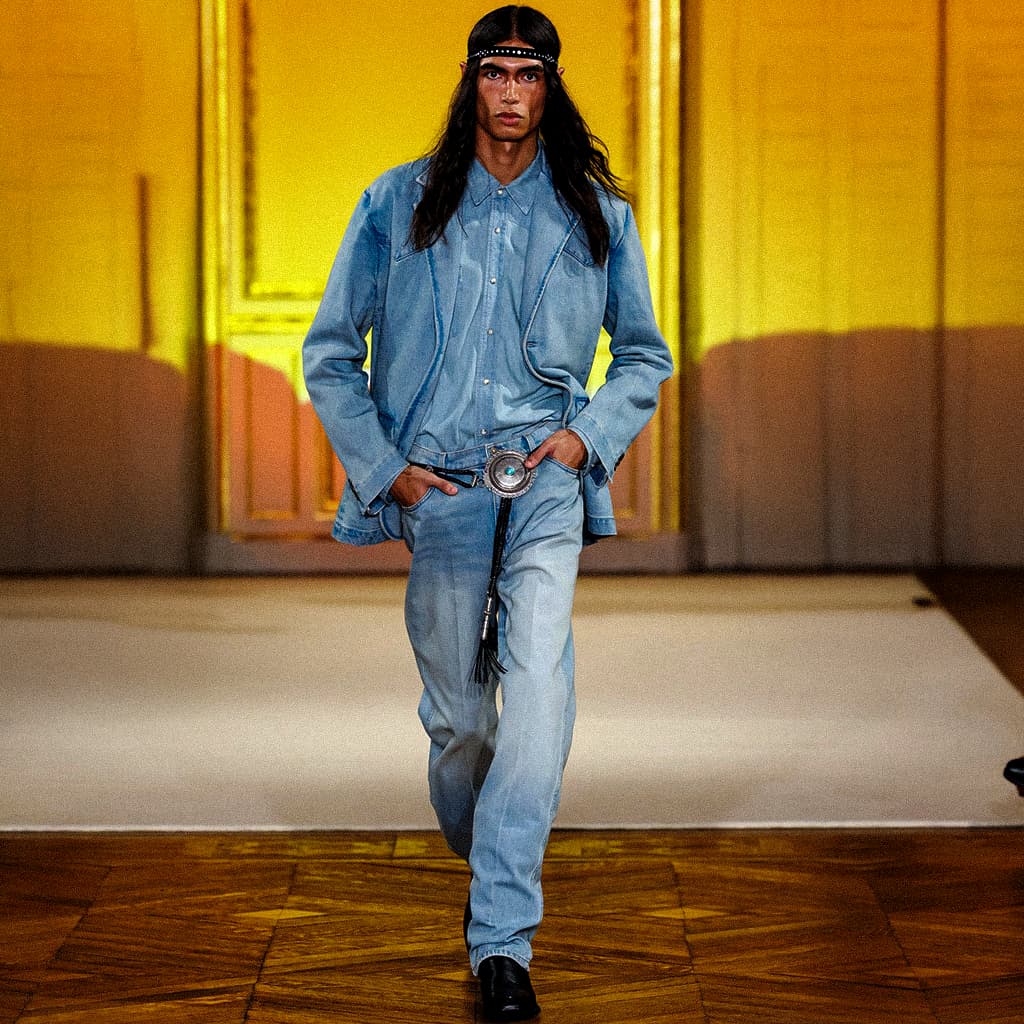
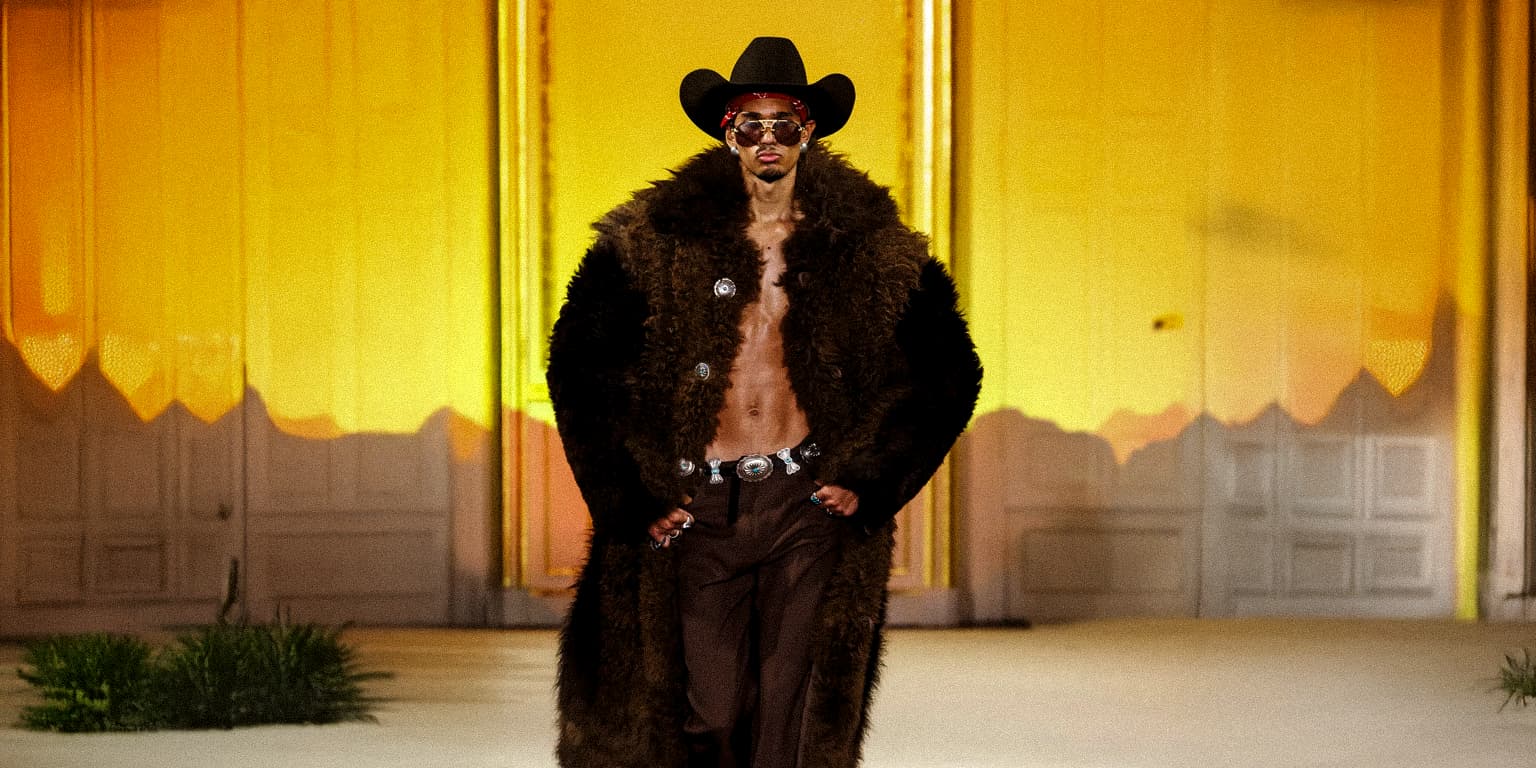
A horse in Paris isn’t fashion. It’s theater. Austin Post isn’t selling denim. He’s selling authenticity as a luxury product, cowboycore dressed for export and soaked in applause. The engine is the celebrity-brand industrial complex. Take a subculture, strip the labor, attach Post Malone as the mask, and sell it back as Western wear at a premium. The cost is cultural theft packaged as accessibility, with Indigenous symbols and working-class uniforms turned into props. What looks like Americana revival is actually America for sale.
Authenticity is a product, not a feeling.
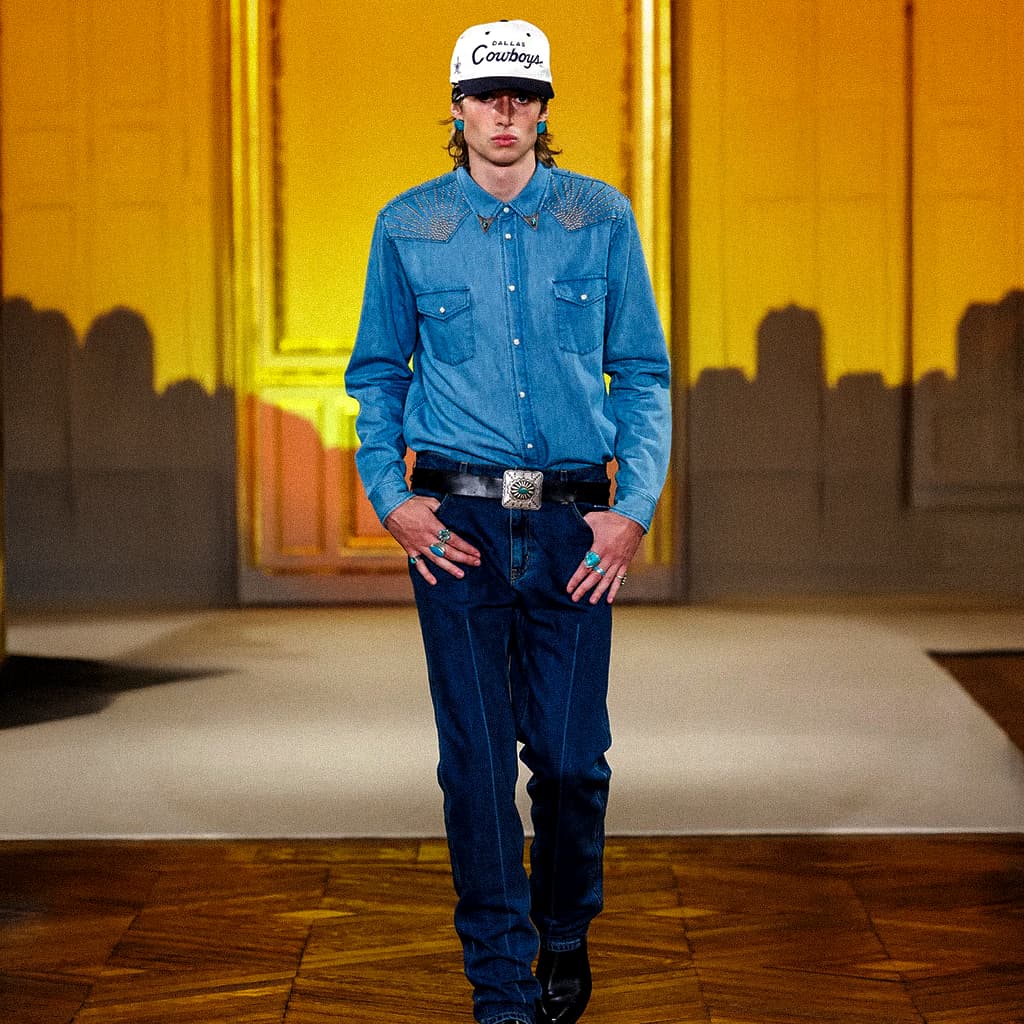
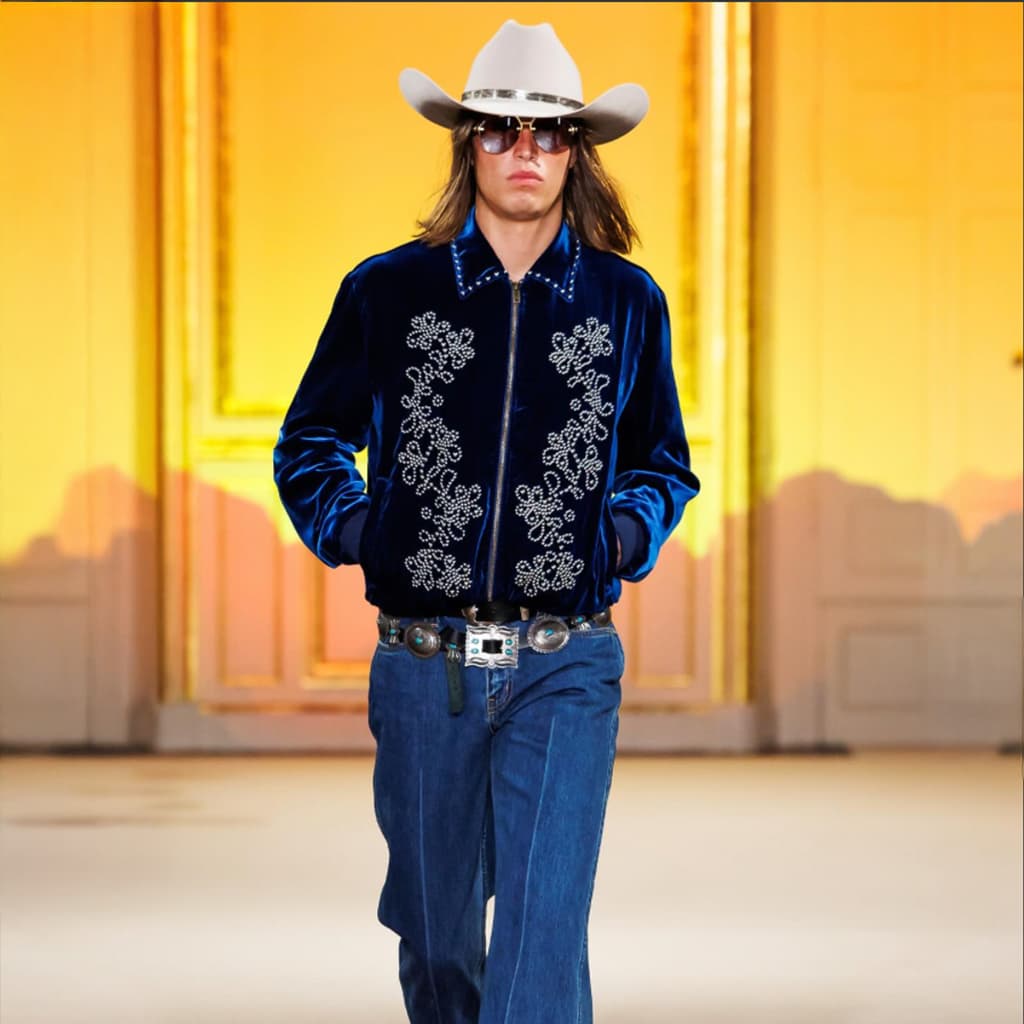
The hooves hit marble. The crowd gasped. That wasn’t truth. That was spectacle. Austin Post walked a live horse through the Hôtel Pozzo di Borgo while cameras fed on the image, then called it real. The venue once belonged to Karl Lagerfeld. The moment belonged to marketing. You can read the receipts in GQ, which details the horse finale and the exact Paris address, and in Vogue, which frames the event as fearless self-expression and claims ranch hands joined professional models. Because a myth needs props, Lucchese boots, Jacques Marie Mage eyewear, and turquoise shimmered under chandeliers like sacraments for sale.
The Post Malone fashion line says it is below luxury. But its first breath was a palace show with a horse, heritage partners, and carefully staged scarcity. That is not ranch grit. That is curation. It sells the idea of sweat without the smell. It borrows the look of labor, then sends it down a runway to be blessed by Paris. Fans will call it authentic because the story is tidy and the photos are pretty. The truth is not tidy or pretty. If you have to prove it with a horse, it’s already fake.
Cowboycore isn’t fashion. It’s cosplay.
Leather creaked. Flashbulbs popped. Denim glittered where dust should live. Cowboycore did not begin in an algorithm. It began on stolen land and long trails. Black cowboys, Mexican vaqueros, and Indigenous artisans built the code that Paris now parades. Historians estimate that one in four cowboys were Black. Meanwhile Beyoncé’s Cowboy Carterturned the dial and retailers sprinted to chase the spike in hats and boots because markets smell blood faster than culture smells credit.
Austin Post packages Western wear for export. Because Paris does not carry the cattle or the land, it only carries the look. So cowboycore becomes cosplay. Vogue called his models ranch hands. GQ called the show a house party with spurs. The internet called it a vibe. But vibes do not pay the artisans whose turquoise became a mood board. This is rebellion without roots. It is history without names. It is a costume with a price tag and a passport stamp. Cowboy-core is America’s cosplay. Costumes without the history.
Celebrity brands don’t sell clothes. They sell belief systems.
Money roared louder than the crowd. SKIMS posted about seven hundred fifty million in revenue because people bought into a story they could wear. Fenty ready-to-wear paused after less than two years because stories can stall when the machine misses the gear. Adidas sold down six hundred fifty million euros of Yeezy stock and still bled, then bragged that the clearance added two hundred million to profit. These are sermons in capitalism. They prove the altar matters more than the cloth.
Austin Post is the newest altar. The Paris show was an investor deck disguised as a saloon. Because belief sells faster than fabric, the Post Malone myth is the SKU. Therefore the pop-up model promises intimacy while scaling demand. So the product can be made anywhere and still feel like the ranch. Fans are not buying Western wear. They are buying permission to feel real. That is why provenance fades and optics rise. That is why sustainability gets quiet when the horse gets loud. You’re not buying jeans. You’re buying a ticket to Post Malone’s myth.
Turquoise isn’t an accessory. It’s a wound.
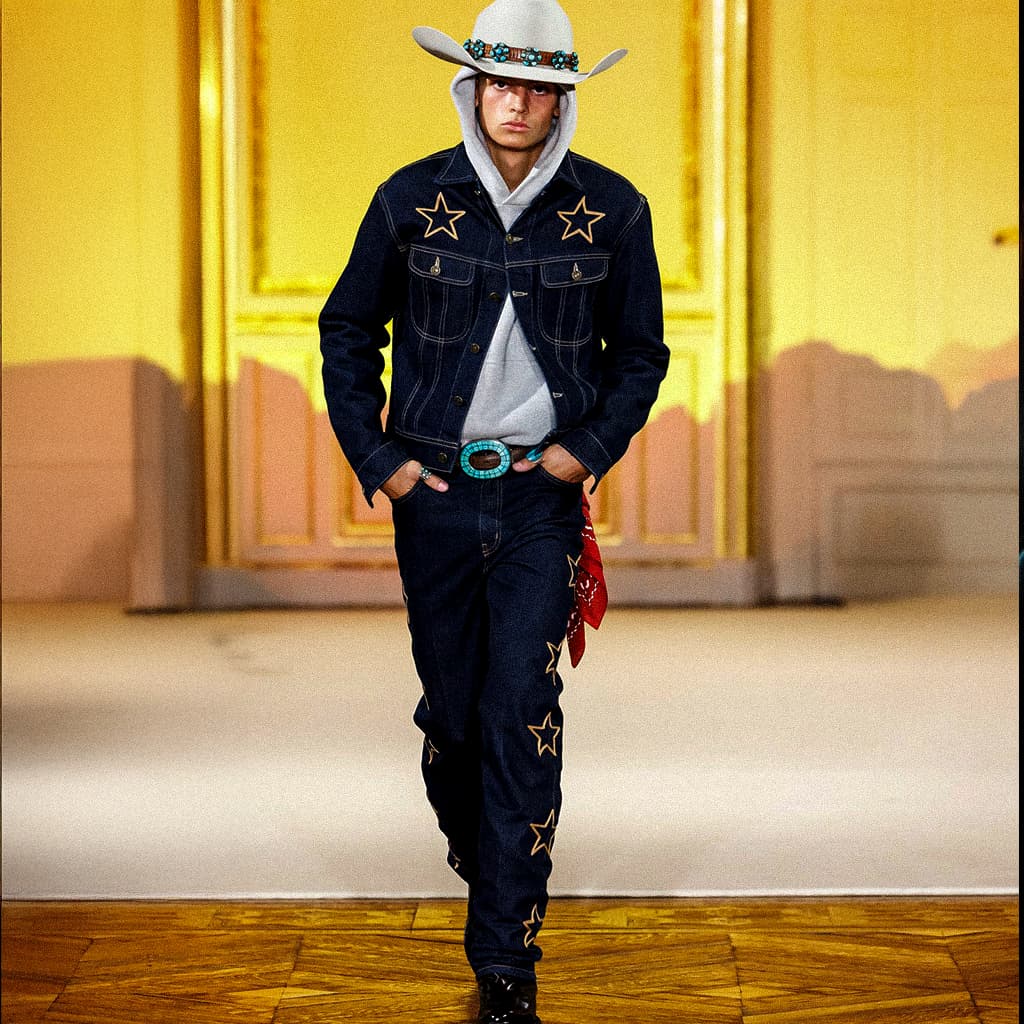
Silver clicked on stone. The air smelled like leather and champagne. Turquoise flashed like a good-luck charm. In this show it was a styling choice. In real life it is lineage. Tennessee Turquoise Company says every purchase supports the National Indigenous Women’s Resource Center. The NIWRC does the work. But Austin Post has not disclosed his own profit sharing or credit path for Indigenous makers whose codes he commercialized. The gap is not a detail. It is the point.
Because appropriation mutates to survive, fashion keeps elevating Indigenous symbols only when stripped from Indigenous hands. Therefore turquoise becomes luxury when a celebrity holds it. It becomes trinkets when the artist sells it. The runway reduces sacred material to a color story. The showroom reduces silversmithing to a vibe. Fans clap because the styling looks clean. The history does not look clean. It looks like labor. It looks like survival. When turquoise turns into trend, the people get left out.
Global stage, local theft.
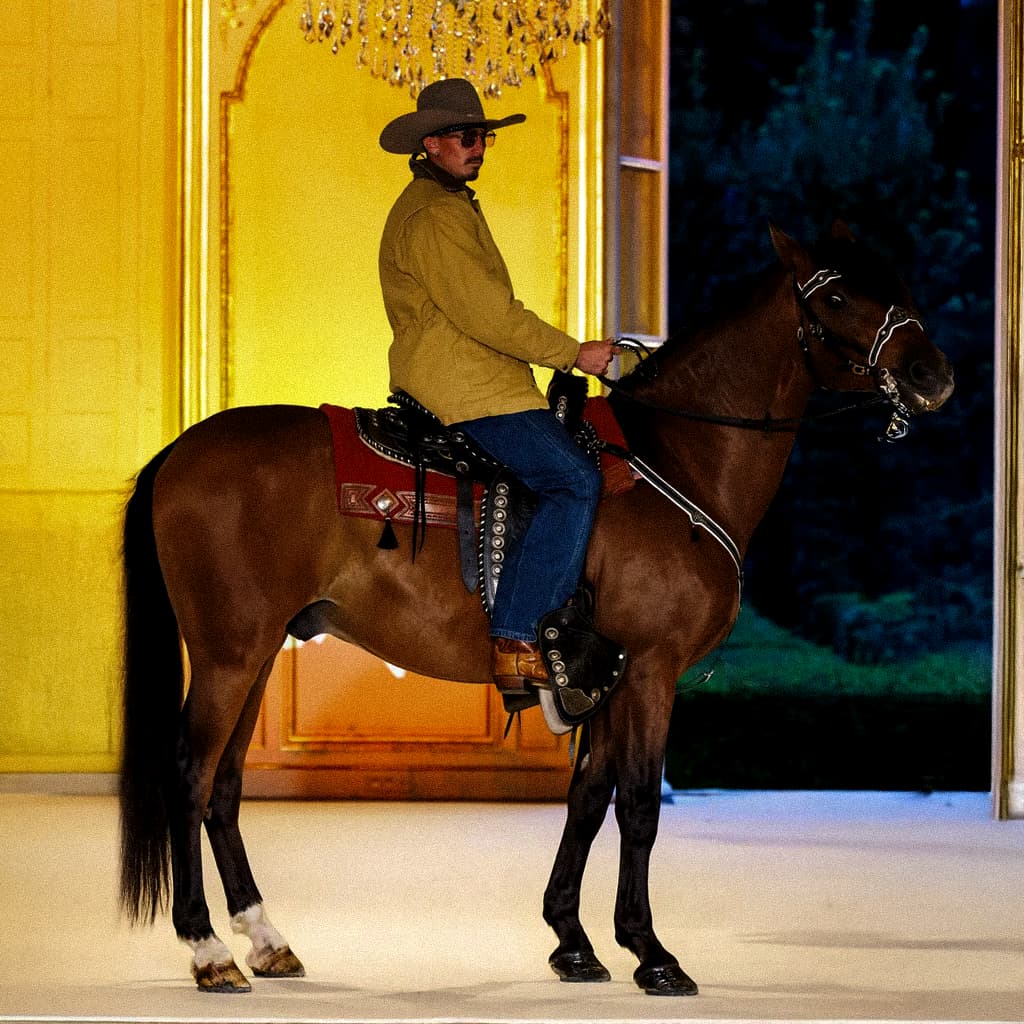
The room smelled like roses and sweat. The horse snorted. Paris applauded. Austin Post smiled. Then the story moved on, because the market always moves on. This debut will be framed as proof that Western wear has gone global. It has. But the cost is local. The cost is in the names removed from the credits. It is in the artisans replaced by factories. It is in the silence that follows the clap.
Because the machine runs on exportable myths, cowboycore becomes currency and America becomes costume. So the subcultures that birthed it watch their uniforms turned into luxury while their communities eat the scarcity. The Paris horse was not a flourish. It was evidence. It told you exactly what the brand is selling and exactly who is buying. Loop it back and it is simple. Austin Post is the headline. The machine is the story. America isn’t being celebrated. It’s being sold.