
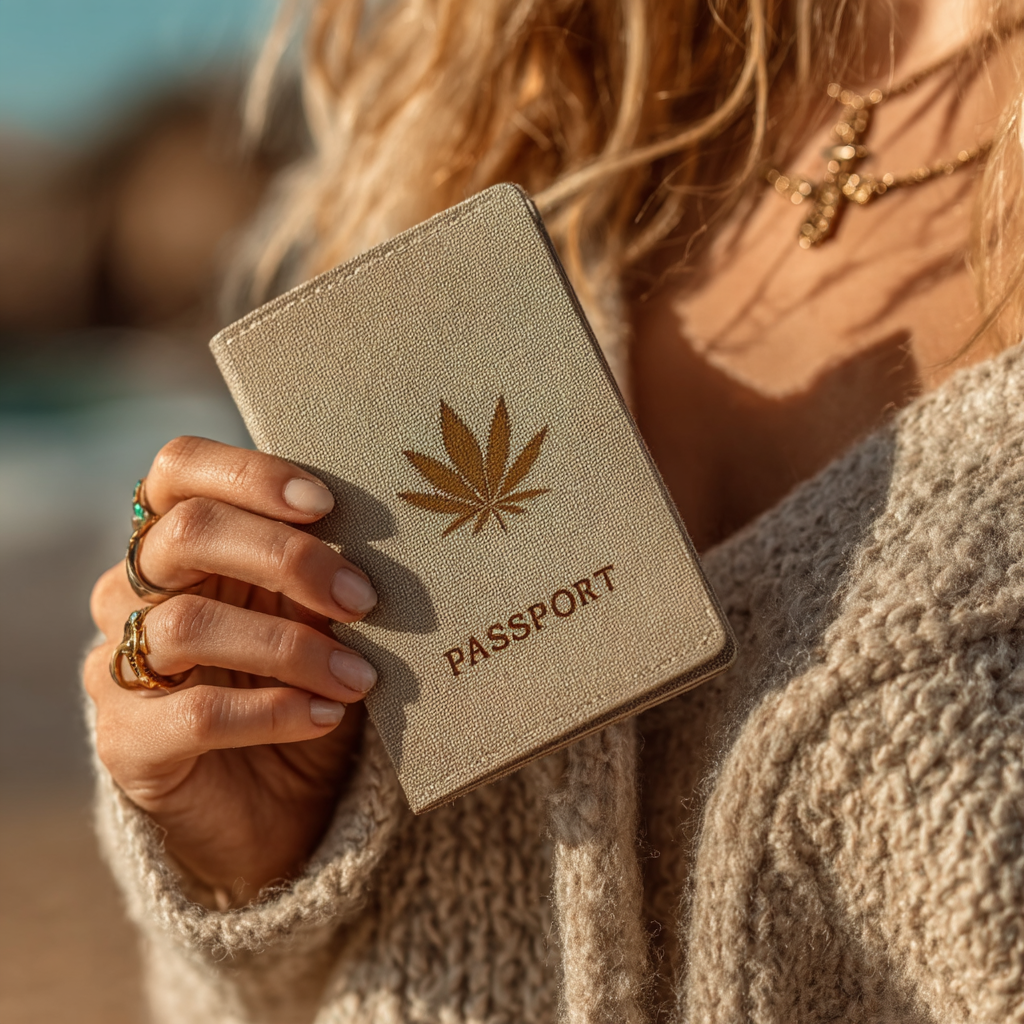
A country that criminalizes weed just made hemp part of its national identity—literally. Progress? Or plant-based PR?
“You can’t smoke it, but you can print your freedom on it.”
In mid-2025, Kazakhstan shocked both cannabis advocates and policymakers when it announced that its new national passports and IDs would be printed on hemp-based paper. It was hailed as a bold sustainability move—but also raised eyebrows: the same country that criminalizes cannabis use was suddenly championing one of its most famous derivatives.
“The plant is fine—as long as it’s silent, processed, and state-approved.”
Let’s be clear. Hemp is not new to this region. Central Asia’s connection to cannabis runs deep. What’s new is political permission. The state has essentially said: you can use hemp to bind your ID booklets—but not to heal, treat, or elevate.
It’s the same plant. But not the same privilege.
“Greenwashing identity doesn’t erase red-line laws.”
Kazakhstan’s use of hemp passports doesn’t signal legalization—just aesthetic tolerance. Citizens still face legal consequences for THC possession. There is no public plan to reform cannabis laws. So why hemp?
Because symbolism sells. And sustainable optics play better on the world stage than progressive drug policy.
“The plant is ancient. The politics are modern. The hypocrisy is obvious.”
Hemp has been used for rope, clothing, and parchment for thousands of years. But to adopt it now, under strict anti-weed policy, is to double down on the state’s ability to control the narrative.
This is identity by convenience: the state gets to look green without touching the fire behind the leaf.
“If your ID is printed on hemp, what does that say about your freedom?”
Kazakhstan’s move is a headline-grabbing contradiction. It gives the plant power, but only in paper form. For now, that power doesn’t extend to personal autonomy, medicinal use, or farmer access.
But maybe it’s a first crack in the armor. Maybe the ID is just the start of an identity shift.
“They banned the flower, then built a system on its stalk.”
This isn’t about legalization. It’s about control. Hemp, stripped of its psychoactive soul, becomes palatable to power. What Kazakhstan did is say: we can use the plant, as long as we decide how.
And that raises the real question: who gets to define the value of cannabis? The culture that grew it? Or the governments now trying to sanitize it?
Hemp ID cards won’t decriminalize weed. But they will force a conversation.
And maybe that’s where change begins—on the surface, pressed between pages of something that used to be contraband.