Daily Weed Use Linked to Chronic Inflammation
A study of young adults found higher levels of one chronic inflammation marker among daily or near-daily cannabis users. That connection deserves attention. It does not prove weed caused the increase.
You can use weed to unwind and still have questions about what using it every day does to your body. Those two thoughts are allowed in the same room.
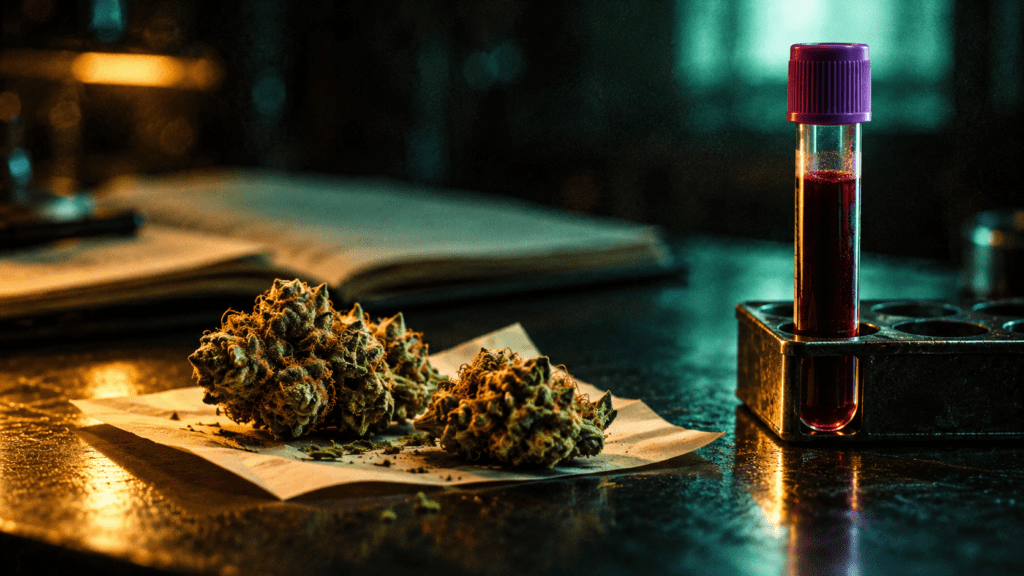
A study published online in December 2024 found a link between daily or near-daily cannabis use and higher levels of suPAR, a blood marker associated with chronic inflammation. The association remained after researchers accounted for tobacco smoking and several other factors.
That’s a reason to pay attention. It’s also a finding worth getting right before somebody turns it into either a wellness slogan or a medical horror story.
The important questions are fairly direct. What did the researchers actually measure? How much can one marker tell us? And does THC hanging around in the body explain the result?
They tested blood. Here’s what showed up.
The study in Psychological Medicine analyzed 914 participants from a British birth cohort, using cannabis-use information and blood samples collected around age 24. Participants reported how often they had used cannabis in the previous year. About 43 reported daily or near-daily use—a relatively small group within the full sample.
Researchers looked at four inflammation markers. Daily or near-daily use was associated with higher suPAR, short for soluble urokinase plasminogen activator receptor. You don’t need to memorize that. What matters is that researchers use it as a marker of longer-term immune activation and systemic inflammation.
The connection persisted in statistical models accounting for factors including tobacco use, body mass index and mental-health conditions. Accounting for those factors strengthens the finding. It doesn’t magically remove every possible alternative explanation.
There’s another important detail: the study did not find an association between cannabis use and the other three markers—CRP, IL-6 and TNFα. Less frequent cannabis use was not associated with higher suPAR either.
So the result is specific. Daily or near-daily use, one elevated marker. That is more interesting than pretending every blood test lit up. Precision doesn’t weaken a finding. It tells you what the finding actually is.
An inflammation marker is a clue, not a diagnosis
Inflammation is part of how the body responds to injury and infection. The question here is whether frequent cannabis use is connected to a more persistent inflammatory state—and what that might mean over time.
A higher marker in a group does not tell us that every person in that group has an inflammatory disease. It does not locate damage in a particular organ. The study’s authors specifically caution that their findings cannot establish inflammation in the brain.
They also measured suPAR at one point in time. That means the result cannot tell us which came first: frequent cannabis use or the higher marker. The study did not establish that cannabis caused the increase, or that the increase led to a particular illness.
None of that makes the result disappear. It means the next research needs to follow the connection further. Repeated measurements, clearer exposure information and changes in use would help distinguish an association from the mechanism behind it.
People sometimes treat “more research is needed” as an instruction to stop listening. Here it means something useful: there’s a measurable signal, and the explanation is unfinished.
THC can linger. That doesn’t solve the inflammation question.
The idea of cannabis remaining in the body helps explain why this subject attracts attention. THC is fat-soluble. It distributes into tissues and can be released slowly, especially after repeated use. A pharmacology review by Marilyn Huestis describes that process and the considerable variation between people and routes of use.
But a fact about storage is not automatically an explanation for chronic inflammation.
The suPAR study did not measure THC in fat stores. It did not track how much was being released, or show that this release caused the higher marker. It also lacked detailed information on dose, product composition and how participants consumed cannabis.
Those missing details matter. Smoking, vaping and eating cannabis involve different exposures. In a 2025 laboratory study, researchers found changes related to oxidative stress and inflammatory pathways when bronchial cells were exposed to cannabis smoke and vaping extracts. That adds a reason to investigate inhaled products. It does not show what an edible does to someone’s immune system, or prove harm from THC stored in fat.
There are several questions here. Squashing them into “weed stays in you, therefore inflammation” gives you a tidy story before the evidence has finished its work.
Take the finding seriously. Leave the miracle fixes alone.
If cannabis is part of your daily routine, this study gives you something specific to discuss with a clinician: frequency, dose, route of use and any symptoms or existing conditions that matter to your care. That is a more useful conversation than asking whether weed is simply good or bad.
The study does not establish a routine blood-testing schedule for cannabis users. It does not show that a commercial detox clears an inflammation risk. It does not identify a safe threshold below which every product and every person is covered. The absence of a suPAR association in less frequent users is not a general safety certificate.
Cannabis also has recognized health risks that don’t depend on this particular inflammation finding, including impairment and cannabis use disorder. We don’t need to inflate one study to justify taking daily use seriously. We’ve also looked at how the FDA’s cannabis risk warnings landed in Congress.
What we have is a connection worth following: frequent use was linked to a marker of chronic inflammation in young adults. What we don’t yet have is the cause, the full health consequence or a proven fix.
If you use daily, bring that distinction to your next health conversation. If someone you know treats “it helps me relax” as the end of every question about cannabis, send them the study. Feeling a benefit is real information. It just isn’t all the information.