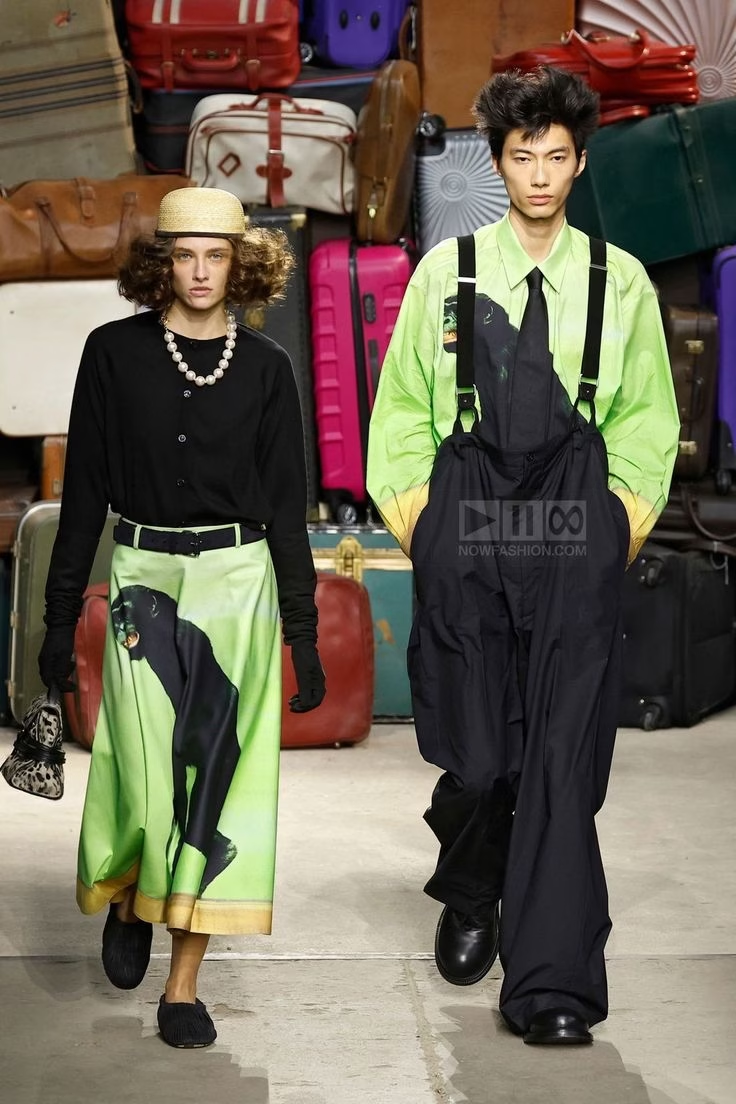
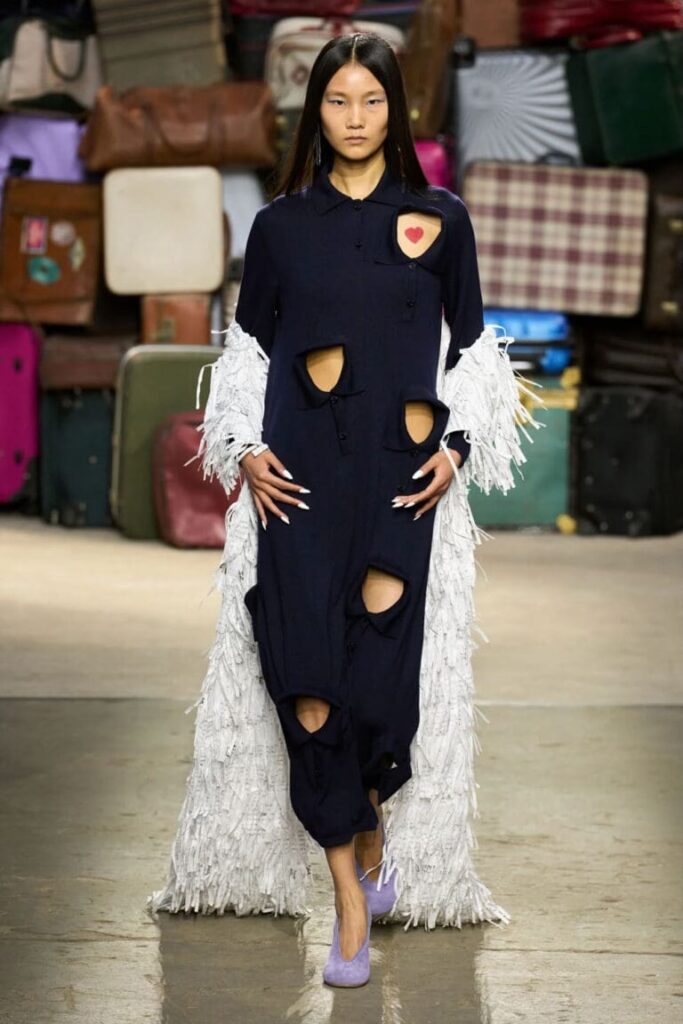
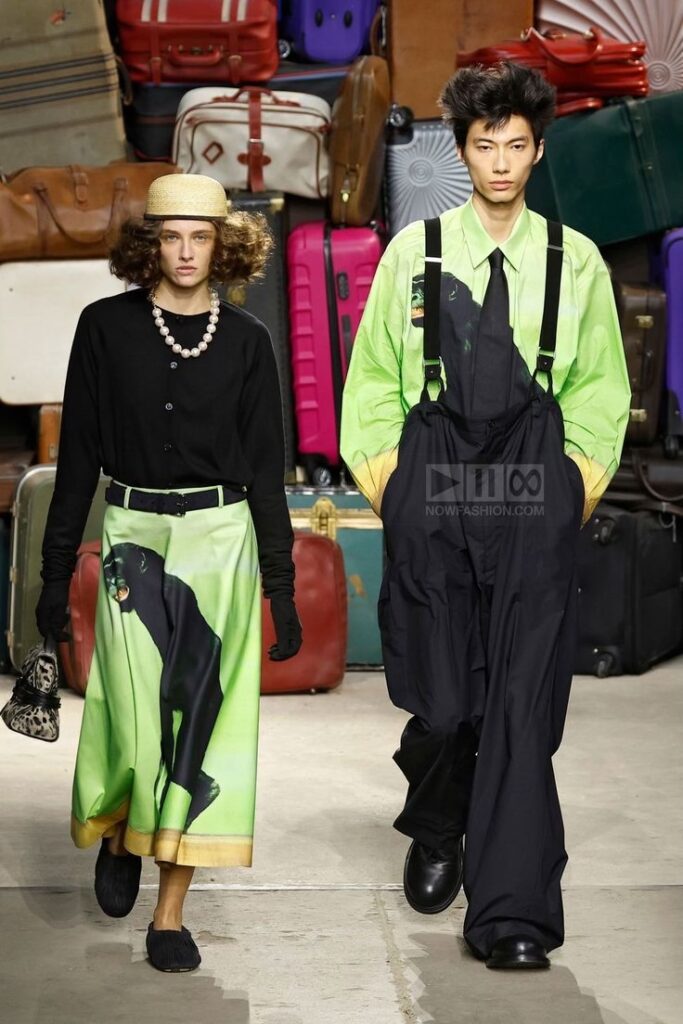
Moschino’s Fall/Winter 2025 doesn’t sell fashion. It outs it. Like a whistleblower in drag. Cut hems hang like slashed wrists. Seams don’t hide. They scream. Scribbles snake across lapels like graffiti on a cathedral. Adrian Appiolazadoesn’t design. He detonates.
You want polish? Get the fuck out.
This collection walks like it’s mid-breakdown. A meltdown in mohair. It’s tailor-shop psychosis—half-pinned suits, trapped zippers, hand-stitched wrongs. But make no mistake: this chaos is composed. It’s couture gone rogue, an autopsy of “luxury” as we know it. And the corpse is still warm.
Perfection is the lie rich people wear. Moschino’s just not pretending anymore.
Appiolaza dug straight into Franco Moschino’s crypt pulling out the bones. The mannequin dress, the ironic signage, the fetish for visual puns. But he didn’t resell them. He ripped them. Repurposed. Re-skinned the archive like a butcher with a paintbrush. Franco joked; Adrian indicts.
This is what happens when irony goes feral.
The fashion industry jerks itself off with reinvention. But this isn’t reinvention. It’s reanimation. Tailoring techniques reappear not as polish, but as prosthetics. Chalk lines stay visible. Threads hang like guilt. Taped seams shout, we weren’t ready but we showed up anyway.
These aren’t garments. They’re confessionals.
The seams aren’t errors. They’re the fucking story.
Because luxury is laundering. It hides the labor, the process, the waste. Moschino FW25 flips that script. Waste becomes ornament. Mistakes become gospel. You don’t buy the product. You wear the process.
And in a world of airbrushed campaigns and AI-designed perfection, what’s more radical than admitting you’re still figuring it out?
So wear the wreckage. Show the stitches. Let the flaws flirt with the spotlight. Because Moschino just did something the rest of fashion’s too gutless to try:
They let it all show.
If your clothes don’t scare a boardroom, they’re not saying shit.
Written By: N. Fontaine
N. Fontaine
N. Fontaine is a writer and editor at RXA who covers music, culture, media, and systemic power. His work is known for sharp analysis and uncompromising critique, exposing the failures beneath cultural spectacle.