
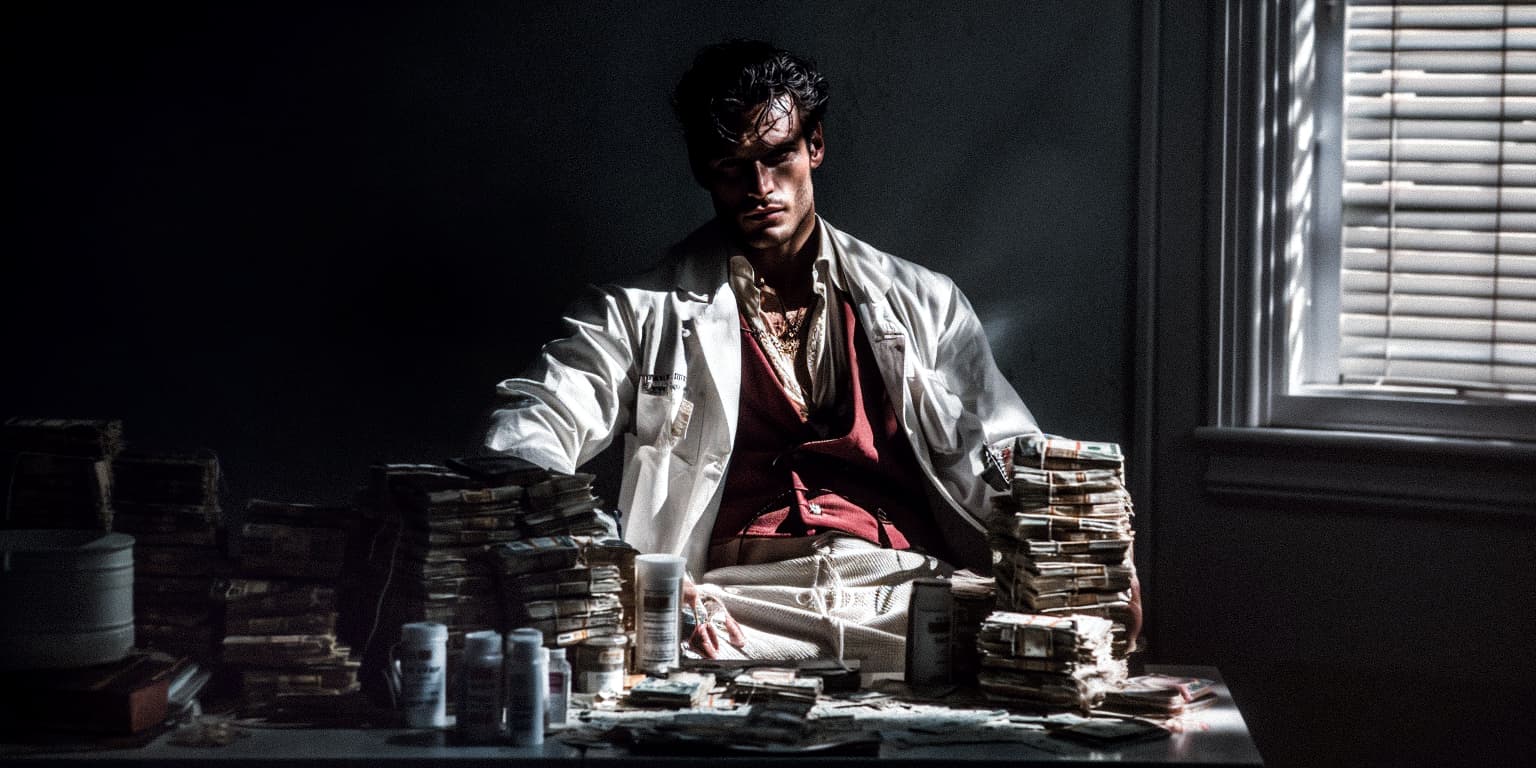
The opioid crisis isn’t a tragedy. It’s a business model. A pharmaceutical cartel built its empire with glossy ads and prescription pads, while the Sinaloa cartel flooded streets with counterfeit fentanyl pills. Both sell dependency. Both stack bodies. The system pretends one is “healthcare” and the other “crime,” but the overdose curve doesn’t care about logos. The only real difference is who gets a fine and who gets a cage.
Healthcare is just organized crime with paperwork.
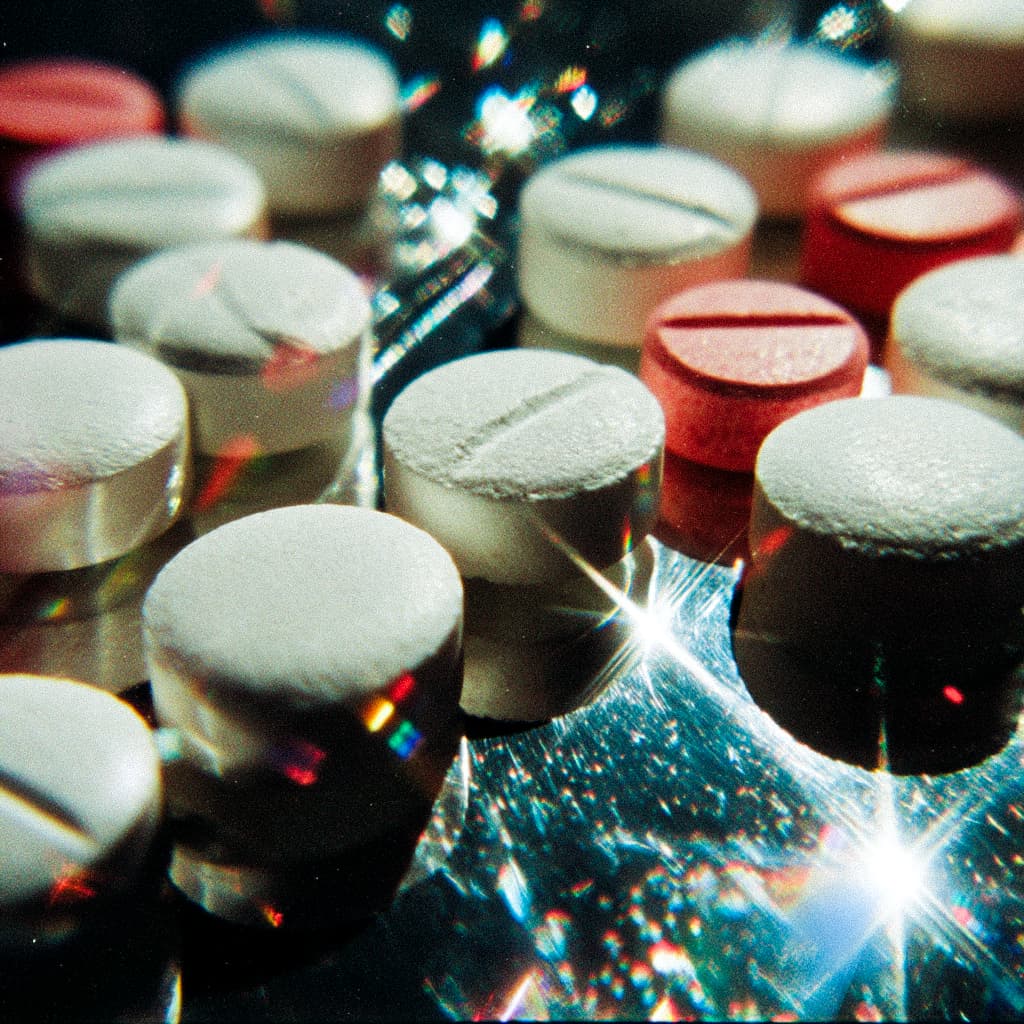
Step into a doctor’s office in the middle of the opioid crisis. It doesn’t smell like antiseptic. It smells like sales. Lunch trays, branded pens, glossy handouts. A pharmaceutical cartel didn’t have to hide in shadows. It just had to hire reps with smiles and expense accounts. Counties with higher marketing spend saw higher prescribing rates and more overdose deaths the next year, proven by JAMA 2019. That wasn’t health education. It was logistics.
The Sinaloa cartel runs the same playbook. Instead of steak dinners, they send stacks of cash. Instead of prescribing data, they guard territory with bullets. Pfizer maps prescriber density. The Sinaloa cartel maps drug routes. Both protect market share. Both build dependency. The bloodstream doesn’t care if the pill came from a clinic or a kitchen lab.
People think legitimacy comes from a license. But licenses aren’t medicine. They’re laundering. They turn poison into product and liability into profit. A pill bottle and a baggie are two sides of the same hustle. One stamped with a barcode. One stamped with a gun.
Pharma hands out samples. Cartels hand out baggies. The hustle is identical.
Fines are bail. Cages are for the poor.
Pfizer broke federal law and paid $2.3 billion. The DOJ Pfizer $2.3B settlement. Executives kept their ties. Shareholders cashed dividends. No one saw the inside of a cell. McKesson was fined $150 million for ignoring suspicious opioid orders that fueled the opioid crisis. That was one month’s revenue. A slap. A write-off. A line item in accounting.
Now put that next to Joaquín “El Chapo” Guzmán. Life in prison plus 30 years. Buried alive in ADX Colorado. The overdose graph doesn’t know the difference between his supply lines and Pfizer’s marketing campaigns. But the justice system does. One gets a fine. The other gets a coffin. The EDNY El Chapo sentencing proves it.
Insys was the exception. Its founder was convicted of racketeering conspiracy, sentenced to 66 months. A headline. Not a precedent. Meanwhile, Sinaloa cartel lieutenants are lucky if they make it past 40 without catching a bullet or a cell.
Justice isn’t about harm. It’s about hierarchy. The same drug that earns Pfizer shareholders another dividend earns a cartel boss another decade in a cage. The overdose deaths are the same. Only the sentencing changes.
Pharma execs buy a settlement. Cartel bosses buy a coffin.
Big Pharma closed the door. Fentanyl kicked it open.
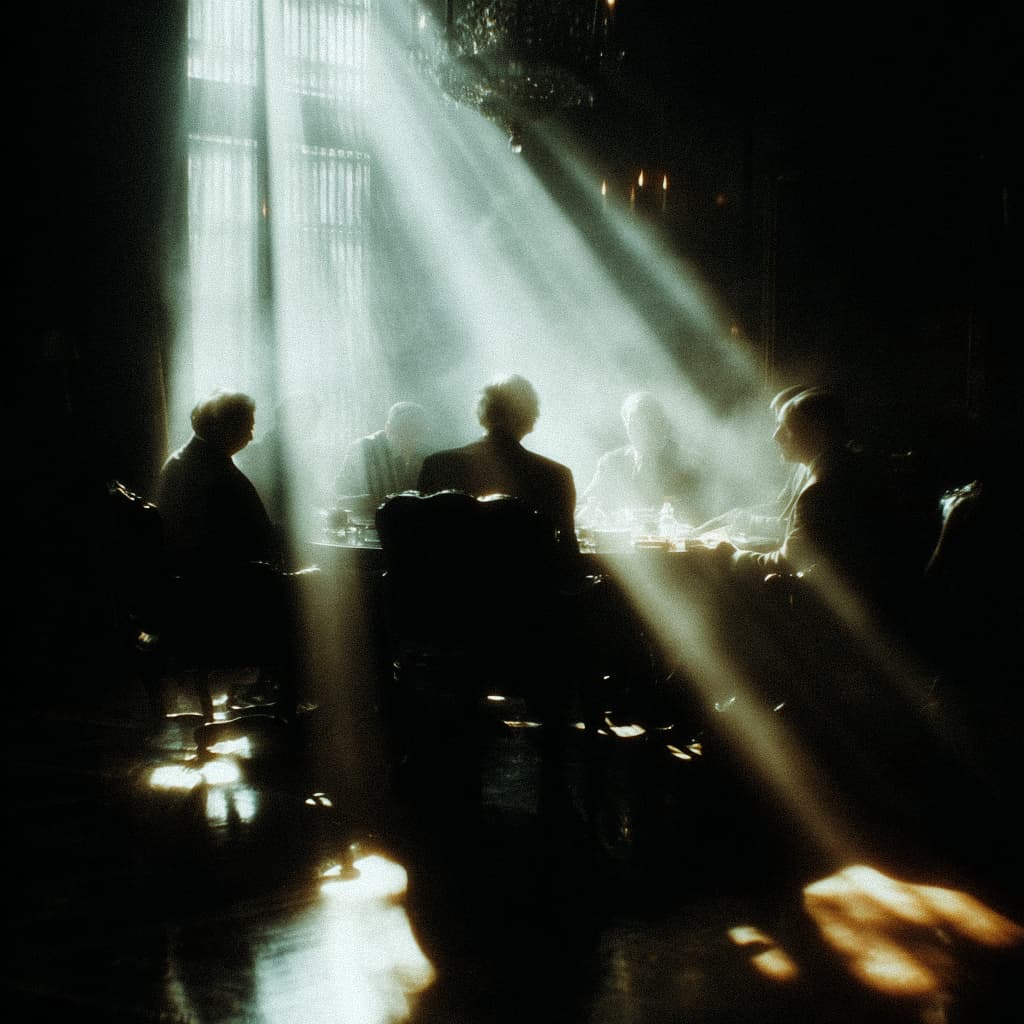
The opioid crisis didn’t slow down because pills got safer. It mutated. In 2010, Purdue rolled out “abuse-deterrent” OxyContin. Harder to crush. Harder to snort. Politicians praised it. Pharma claimed innovation. Users didn’t quit. They switched. Studies confirm what addicts already knew: when pills locked up, needles opened up. Notre Dame researchtracked the pivot.
Heroin use surged. Then fentanyl took over. Cartels pressed fake “M30” pills stamped like real oxycodone. The DEA One Pill Can Kill campaign warns 6 out of 10 contain a lethal dose. Pharma’s reformulation wasn’t deterrence. It was a pivot. A shield for liability. The harm didn’t vanish. It got outsourced.
This is what corporate safety looks like: addiction rerouted into a deadlier street supply. The bloodstream doesn’t care about abuse-deterrent coatings. The brain only craves relief. Pharma knew that. Cartels knew that. Both sides exploited it.
The overdose crisis isn’t a glitch. It’s the result of safety theater. The pill didn’t stop the craving. It just redirected it into poison stronger than morphine, hidden in counterfeit pills deadlier than bullets.
When pharma locked the pill, users opened a needle.
The pharmaceutical cartel and Sinaloa cartel keep the money clean.
Money has no morality. It doesn’t care if it comes from a pharmaceutical cartel or the Sinaloa cartel. Pharma spent half a billion lobbying Washington in 2023, making it the OpenSecrets top lobbying sector. Laws bent. Liability softened. Cartels spent billions laundering through banks, front companies, and now fintech. In 2025, the Treasury FinCEN fentanyl laundering orders 2025 cut off three Mexican banks for funneling profits. Different systems. Same laundering.
Every overdose is monetized twice. First by the supplier. Then by the system. Narcan contracts. Rehab monopolies. Medicaid billing. Even opioid settlement checks fatten state coffers while overdoses continue. A corpse isn’t an end point. It’s part of the cycle. Someone still gets paid.
The opioid crisis isn’t treated as a public health disaster. It’s treated as an economy. An endless stream of dependency turned into cash. Pharma sells the pill. Cartels sell the counterfeit. The government sells the cure. Nobody loses except the user.
Addiction isn’t a tragedy. It’s a revenue stream.
Marketing is a trigger. Death is the side effect. The Pharmaceutical Cartel is real.
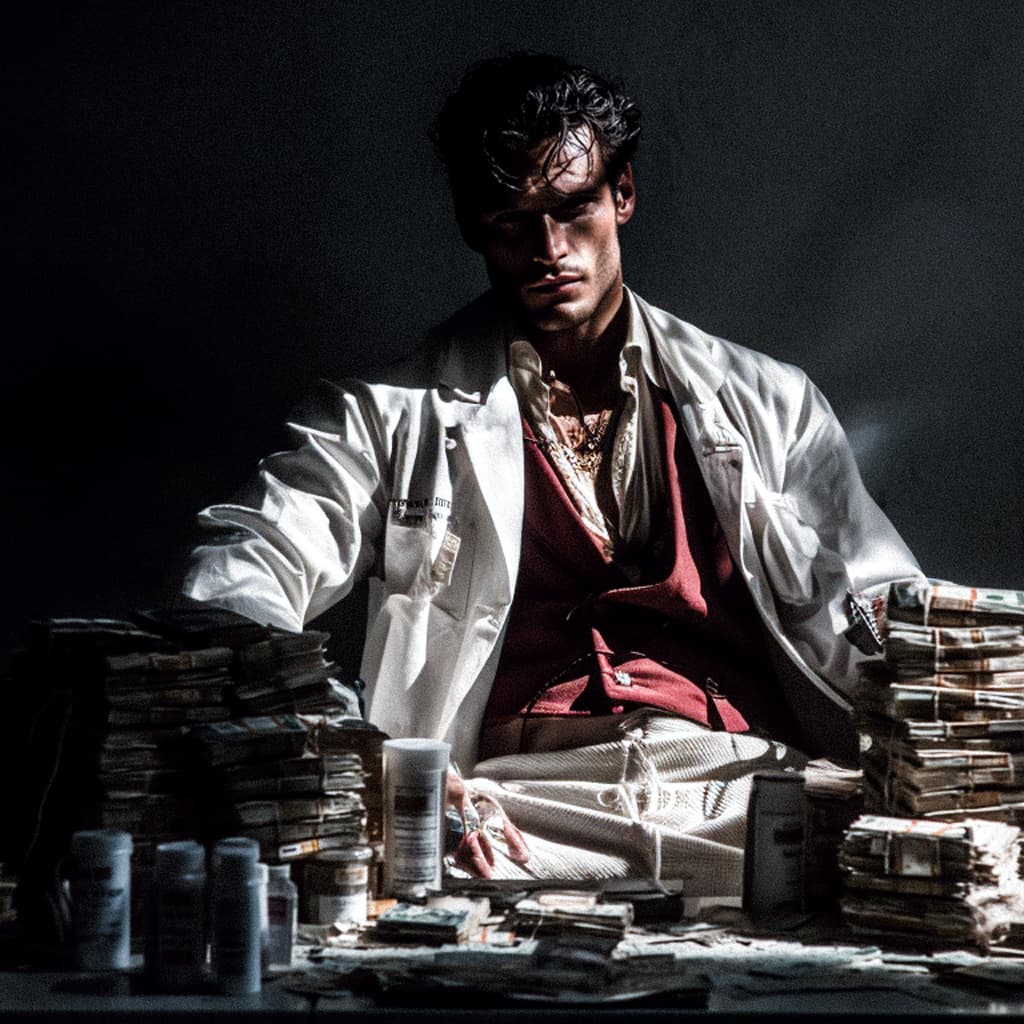
Pharma’s weapon wasn’t chemistry. It was persuasion. JAMA 2019 shows more marketing in a county meant more opioid prescriptions, more dependency, more deaths the next year. Sales pitches disguised as “education” rewrote how doctors prescribed. Lunches, freebies, trips. Not care. Conversion funnels.
Cartels understand branding too. They press counterfeit Xanax, counterfeit Percs, counterfeit Adderall. They spread myths like rainbow fentanyl on TikTok. They sell familiarity! Pills stamped to look legitimate. That’s marketing. It’s not about chemistry. It’s about perception. Lower the defenses. Hook the user.
The opioid crisis isn’t fueled by demand alone. It’s manufactured. Pharma built it with glossy brochures. Cartels sustain it with stamped fentanyl pills. The bloodstream doesn’t ask where the logo came from. The sale already pulled the trigger.
Whether it’s a billboard or a baggie, the sell kills.
The overdose graph doesn’t care about uniforms.
CDC overdose data shows 105,000 deaths in 2023. Eighty thousand in 2024. A decline on paper, still carnage in reality. Numbers that dwarf battlefields. Each body tied to the same chemistry. Some swallowed from orange bottles. Some bought from alley dealers. The bloodstream doesn’t care about uniforms.
Politicians parade border crackdowns. Pharma lobbyists polish safety narratives. Cartels adapt with new fentanyl precursors. Executives keep their suits. Users lose their lives. The only constant is the graph. Rising, falling, rising again, charting blood like weather.
The pharmaceutical cartel and the Sinaloa cartel are not opposites. They are mirrors. Both sell dependency. Both wash their profits. Both leave graves behind. One gets called “healthcare.” The other “organized crime.” The molecule doesn’t care. The nervous system doesn’t care. The grave doesn’t care.
Your nervous system can’t tell the difference between a prescription and a pressed pill.