Sue Kwon’s Hip Hop Photos Deserve More Than a Nostalgia Scroll
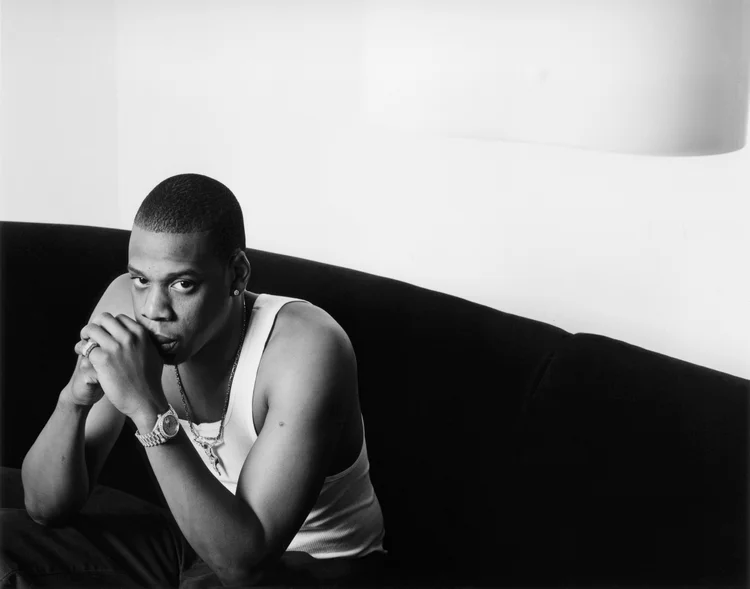
In Sue Kwon’s portrait, Jay-Z is looking straight at us. Hands clasped near his mouth, white tank top, watch catching the light. He leans forward on a dark couch, with plenty of empty space beside him.
We know the face. Fine. Now look at the photograph.
Sue Kwon deserves more than a celebrity roll call. The body has a shape. The room has a presence. The person is looking back. If all we’ve noticed is the name, we’ve barely started.
Turn this archive into a greatest hits slideshow and the photographer gets reduced to whoever happened to be in front of her. That’s a lousy deal. The names can get us through the door; the framing is why we should stay.
Start with her official music gallery. Then leave the celebrity checklist alone for a minute.
The rapper is famous. The framing still matters.
Kwon’s photographs of hip hop are collected in Rap Is Risen: New York Photographs 1988–2008, published by Testify Books in 2021. Her work includes documentary pictures and commissioned portraits. Those categories matter less here than what she manages to keep in the frame.
Take Sue Kwon’s Mobb Deep photograph in her Street Level selection. One man turns left; another holds a small child. A ceiling fixture and a window keep the room insistently present.
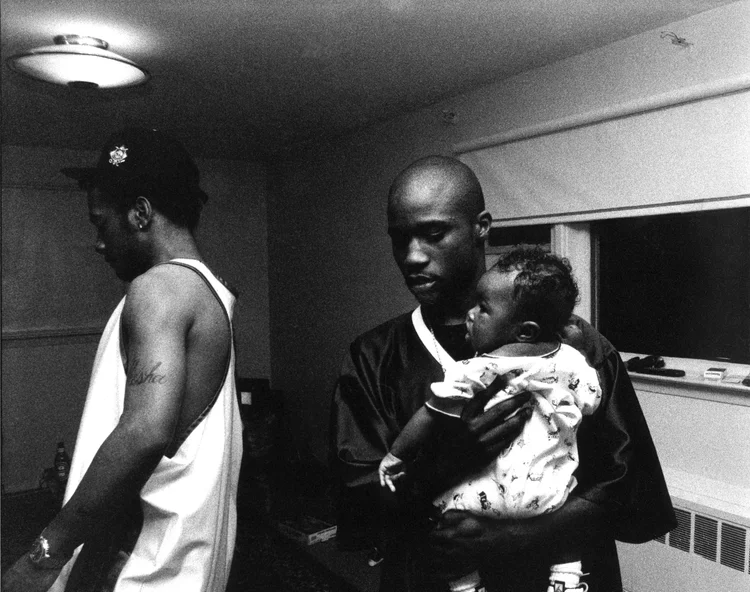
This is why we want the room left in. Everybody isn’t lined up to deliver the same message. Follow the gesture, look across the room, come back to the child. Crop it down to two recognizable faces and we’ve thrown away half the reason to look.
We don’t need to invent a family history or decide what anybody was secretly feeling. There’s enough in the picture already. Sometimes the urge to explain a photograph becomes an excellent way to stop looking at it.
And the Jay-Z portrait complicates another easy description: “unguarded.” He meets the camera. There’s a pose. Good. A person being aware of the photograph doesn’t automatically ruin it.
We can retire the idea that a revealing image requires catching somebody when they aren’t paying attention. Performance is part of how people present themselves. A photographer can work with that, too.
The laundromat belongs in the archive
Kwon’s first monograph, Street Level: New York Photographs 1987–2007, came out in 2009. Its scope helps explain why the rap pictures feel like part of a larger life.
In a 2009 interview with Mauricio Vargas, she said she wanted the book to extend beyond celebrities. Famous people could be in the book without becoming its entire reason to exist.
There’s a lovely example in Tamara Warren’s interview with curator and writer Vikki Tobak. Tobak recalls a Kwon contact sheet with Wu-Tang photographs and a Chinatown laundromat sequence. She recounts Kwon explaining that she had stopped to photograph a mother and child on the way to the music shoot.
Think about that choice. A music assignment gives the day an obvious destination. Something along the way still deserves a photograph.
That’s the part we like. Attention that hasn’t handed the entire schedule to fame.
In another of Sue Kwon’s Street Level pictures, a child wears an angular mask while another stands nearby with cloth over their head. Food signs and buildings remain behind them. There’s play here, and people deciding how to present themselves. Apparently, a person can be interesting without a publicist confirming it.
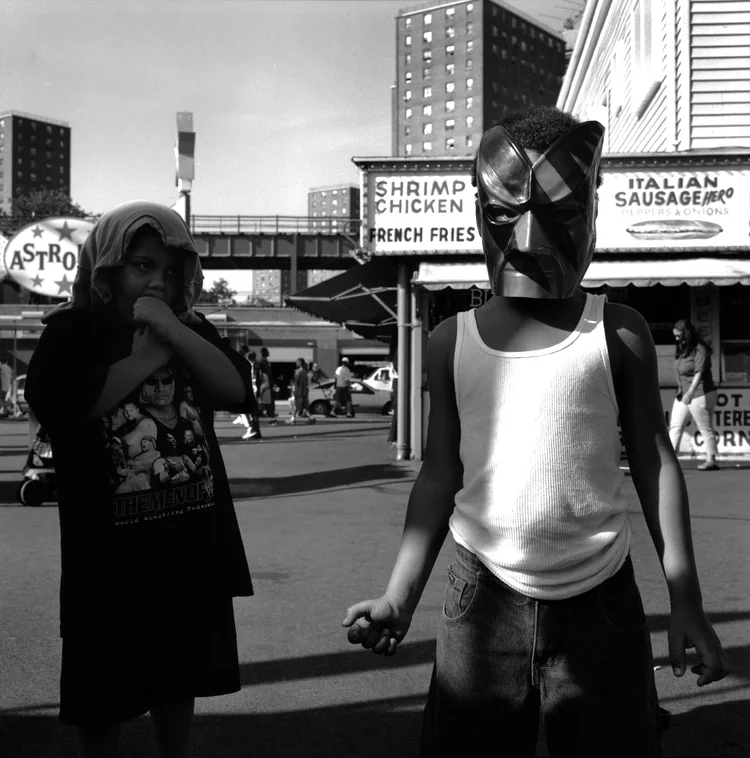
The children don’t need to be described as future stars to earn their place. They’re already worth looking at.
Please don’t turn New York into a memorial slideshow
It would be easy to make all this about how everything used to be better. Old clothes, old streets, familiar musicians before the years caught up with them. Add a mournful caption and we can all feel very discerning.
But nostalgia can make us inattentive in its own way. We stop noticing the photograph because we’re busy congratulating the decade.
Kwon gives us reason to resist that reading. In a 2024 interview published by Carolina Bucci, she still noticed younger people opening boutiques and small galleries downtown. Her account of change left room for people making things there.
Her practice has also included commercial work. A 2024 CNCPTS editorial for Adidas credits her portrait photography. We don’t have to pretend commissions disappeared from her life for the street pictures to matter.
We’re not interested in awarding street photography a purity medal. A commission can produce a photograph worth our time. So can a pose. The work has to earn our attention in the frame; romantic stories about the good old days can wait.
Give the photograph longer than the name
Here’s a useful way into Kwon’s work: recognize the person, then keep looking.
Where do the hands go? How much of the room survives? Who looks at the camera, and who directs our attention somewhere else? What would disappear if we cropped everything down to a famous face?
Those questions give us something better than another argument about which era had the best rappers. We can have that argument later. Loudly, probably.
For now, there’s a photographer whose attention moved between music assignments and the life around them. The pictures reward us for moving with it.
We came for somebody we knew. Sue Kwon gives us reasons to notice everybody else.