
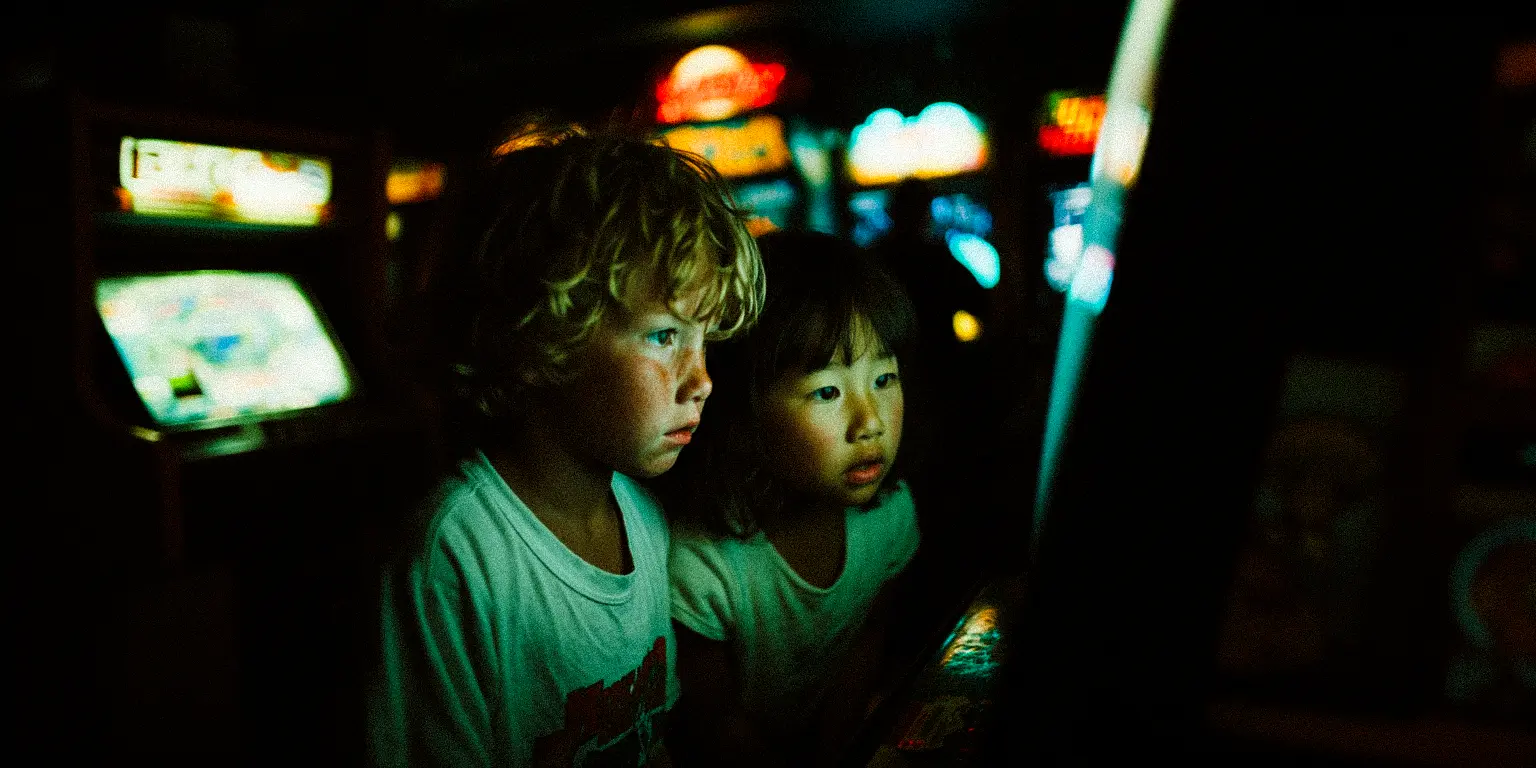
The lights don’t blink for fun. They blink for control. Every sound, every flash, every jackpot animation in those ticket games hits the same circuits that make people chase wins on gambling apps. Arcades learned early how to turn curiosity into craving. Training a generation to live inside the reward loop. The cost is not just pocket money. It is a lifetime of chasing the same dopamine on every screen that follows.
“It’s not play. It’s programming.”
You feel it in your chest before you name it. The hum. The fake clatter of coins. The sticky carpet and sugar air. The screen says almost. Your brain says go. Ticket games run on variable rewards. That schedule keeps the dopamine spiking because the prize is unpredictable. Near-miss outcomes light up the same brain circuits as a win, which is why almost feels like progress rather than loss and why cabinets are built to deliver almost over and over.
Kids do not talk about reinforcement schedules. They talk about fun. But the fun is structured. The audio is bright. The lights are loud. The cabinet animations celebrate effort even when the outcome is zero. That trick keeps the reward loop alive without paying out. It trains patience into persistence. It turns persistence into spending. It turns spending into habit. You can see the same principle in how near-miss patterns push people to keep playing. The label changes. The behavior repeats.
Parents see smiles and motion. Operators see time on device. The machine never says stop. It says one more swipe. One more spin. One more try. Because the next try keeps the loop profitable even when the prize is worthless. You don’t win at ticket games. You just learn how to keep losing better.
You don’t win at ticket games. You just learn how to keep losing better.
“They turned patience into profit.”
The trick is not the plush. It is the math. Many family entertainment centers target roughly a quarter of spend returning as prize value. That leaves the house with most of the pot while players collect points that rarely add up on a single visit. A leading ops guide calls “a good goal overall a payout of 25–30 percent.” That turns patience into revenue while players chase totals at the counter.
Now the paper mess is gone. Digital tickets flow into a balance you cannot feel in your hand. The friction disappears. The swipes multiply. On the floor it looks like progress. The balance climbs. The cabinet sparkles. The account nudges you toward a bigger goal. But the goal keeps drifting because low expected value stretches distance with each play. Entertainment already drives the majority of revenue in arcade chains’ public filings, which tells you where the real business sits when cards keep swiping.
Kids think patience is the path. The system knows patience is the product. Because the longer you wait, the more you spend. The more you spend, the less you notice the gap between points earned and prizes priced. The loop rewards time. Not outcomes. The house always wins. Even when the house looks like Chuck E. Cheese.
“Childhood is being rewired for the jackpot.”
Teen brains respond harder to uncertainty. That is not an insult. That is biology. During adolescence the reward system fires louder under maybe than under sure. Which means unpredictable payouts hit harder. The adolescent reward system leans toward bigger responses when outcomes are uncertain, so neon and noise do not just entertain. They condition.
Watch a kid lean in. Shoulders tight. Breath short. Eyes on the wheel. The second the lights spin, the room disappears. That is not attention. That is immersion. The loop is being written. Because the brain ties effort to reward when near-misses keep tapping win circuits. Casino-style lights and sounds push players toward riskier choices. The effect is sensory and measurable. The environment is the message.
So the arcade becomes a lab for reaction. Not skill. Not mastery. Reaction. Keep playing. Keep trying. Keep believing that closer means smarter. Childhood learns the rhythm. Adulthood keeps the beat. The machine doesn’t take your money. It takes your wiring.
“The arcade learned from the algorithm.”
Arcades walked so feeds could run. The same reward loop that hooks kids to ticket games is the one that hooks everyone to short video. Variable rewards. Hidden jackpots. Micro wins. Social apps call it engagement. Cabinets call it bonus. But it is the same choreography of maybe. That is why the shift from tokens to taps felt natural.
Look at the parallels. Streak counters and progress bars mirror punch cards and e-ticket tallies. Near-miss animations mirror the next-video tease. The high comes from almost. Not from arrival. Loot box spending sits on the same psychology, and youth risk rises as those mechanics spread. Links between loot boxes and problem gambling show clear association, so the industries differ while the circuitry stays shared.
So the feed feels like home. The sounds changed. The loop did not. Notifications replaced sirens. Haptic taps replaced flashing rims. But the brain reads both as maybe. That is the hook. That is the hold. The arcade was just the first version of the feed.
“We taught kids to chase what doesn’t exist.”
The tickets became points. The points became likes. The likes became streaks. The feeling stayed the same. Almost there. One more. Then another. Because once a reward loop writes itself into daily life, it does not need neon to survive. It lives in the small spaces. In line. On the bus. Before bed. It sells attention back to the same systems that trained it.
Here is the move that protects you. Name the loop out loud. Then break it on purpose. Set a rule that hurts the habit. Play three games then stop. Scroll for ten minutes then quit. Cash out the balance even if the prize feels small. Because the win is not the plush. The win is control. If you are a parent, cap time and budget before the card is loaded. If you are a teen, treat the cabinet like a riddle. If the EV is low, walk away. If the almost hits too hard, take a lap and reset your breath. The power move is not perfect discipline. It is noticing the pattern and choosing anyway.
The tickets never mattered. The wanting did. And just so we are clear, you don’t win at ticket games. You just learn how to keep losing better.