
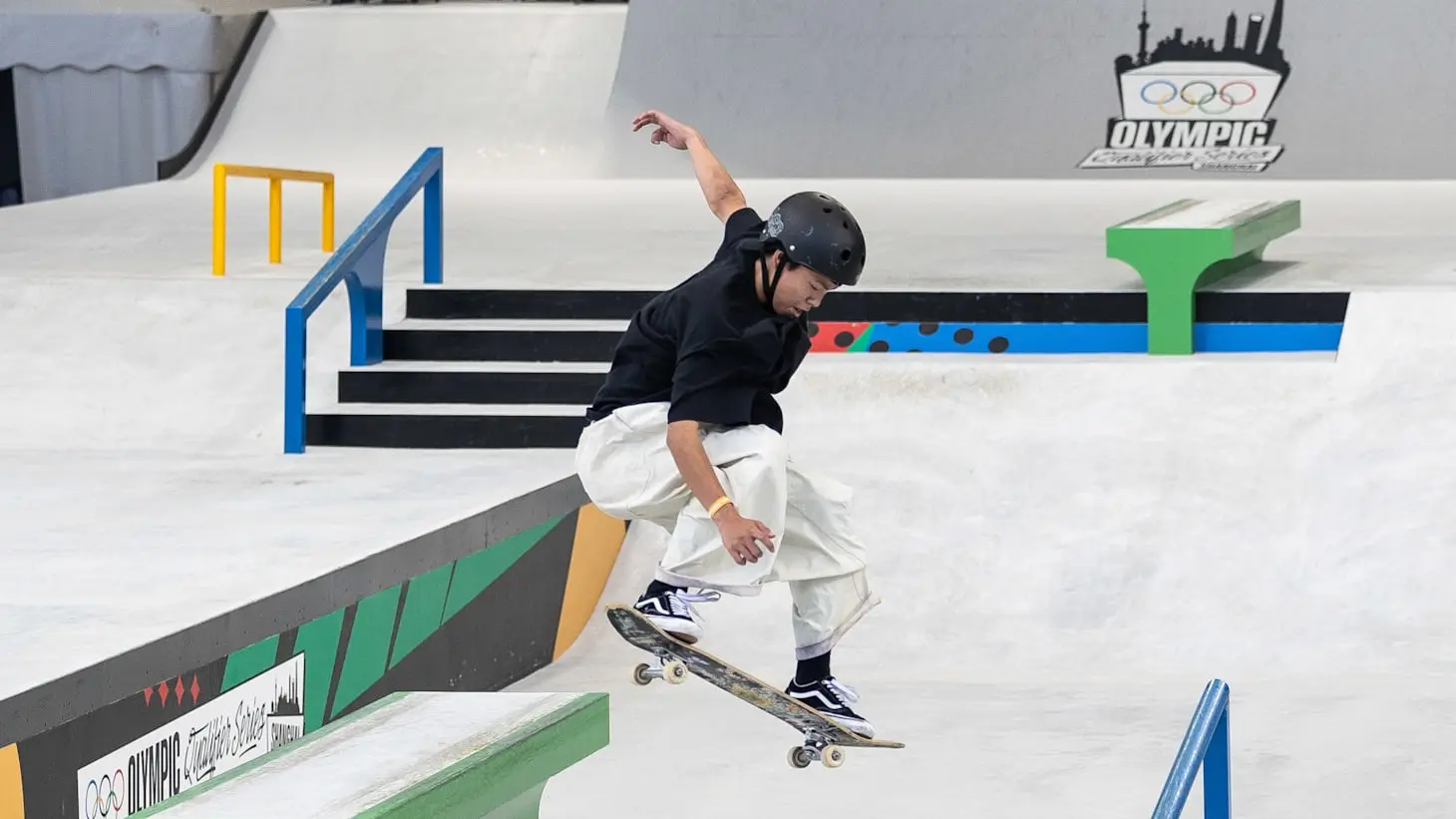
He was crowned the best in the world and still told to sit out. That’s not sport. That’s a system wired dirty to protect itself. When the scoreboard says champion but the Olympic gatekeepers say no, you realize medals aren’t merit. They’re quotas. They’re politics. Toa Sasaki didn’t need Paris because Paris needed him, and the machine couldn’t admit it.
The scoreboard doesn’t lie. The system does.
Picture Rome 2024. The concrete heat rising off the plaza. Toa Sasaki standing at the start ramp with the weight of the world on his shoulders. He’s thirteen points behind after his first run. The crowd knows it. The judges know it. Most kids would fold. Sasaki locks his face into ice and turns the pressure into fire. By the time he lands his final Best Trick, he has flipped the script. From minus thirteen to plus eleven. The scoreboard calls him champion. The official World Skate Games results document his comeback run and the Caballerial fakie nosegrind that sealed it.
But then the Olympics shut the door. Paris was sold as the stage for the best, yet Sasaki wasn’t there. Not because he failed. Not because he wasn’t good enough. Because Japan already filled its slots. Bureaucracy benched the world champion. That’s not competition. That’s control. When a street skateboarding world champion can’t compete in the Olympics, you know the medals don’t tell the truth.
Fans celebrated his Rome miracle. Officials treated him like overflow. This is the contradiction. The world saw greatness. The Olympics saw a math problem. And math won. You can win the world and still be erased by paperwork.
The sponsors shout louder than the skaters.
You didn’t hear about Sasaki’s silver medal in Rome 2025 from a neutral outlet. You heard it in a Monster Energy press release. “What a final.” “Never been done tricks.” The copy reads like a script. Vans Japan pushes VHS-style vlogs of the Sasaki brothers skating through city streets. Disorder Skate drops clips wrapped in rebellion. Every narrative is wrapped in a logo.
This is the trap. The brands don’t just fund the contests. They script the culture. They tell you how to feel about the runs before you even watch them. When Sasaki dominates, the headline isn’t “skater wins.” It’s “skater sells.” The story of Toa Sasaki becomes a billboard campaign. And the youth eat it up because it looks like rebellion. But rebellion that comes pre-packed in an algorithm feed is not freedom. It’s product placement.
And still. Sasaki makes it work. His skating slices through the noise. Every ollie. Every slide. Every trick that echoes across Instagram clips. The talent is undeniable. But the story is sold before you ever see it. His highlight reel isn’t news. It’s an energy drink commercial.
They call it opportunity. It smells like exploitation of Toa Sasaki.
Seventeen years old. That’s all. And every headline milks his age like it’s a product. “Teen prodigy.” “Next star.” “The future.” It reads like praise but it’s really extraction. Youth is the most valuable currency in this culture. The younger you are when you break through, the faster the system cashes in on you.
Look at the pattern. Every few years a kid gets crowned the next big thing. Sponsors flood in. Clips go viral. Fans scream. And then silence when the hype curve dips. The youth is sold, burned, and replaced by another name. The content paradefeeds on children and calls it opportunity. Toa Sasaki is just the latest face stamped onto the hype cycle.
Watch him ride in Rome. Calm eyes. No smile. No nerves. Just cold fire. It looked like confidence. It might have been armor. Because he knows he’s skating in a system that praises him for his youth but plans to discard him just as fast. They’re not celebrating his age. They’re cashing it in.
Quotas don’t keep balance. They kill dreams.
The Olympic rulebook talks fairness. It smells like manipulation. Each country gets a cap on how many skaters can compete. Japan had too many killers. Sasaki was one too many. Top ten in the world. World champion. Still invisible in Paris. That’s not balance. That’s control. He was ranked inside the global top ten after the Olympic Qualifier Series yet still benched because of national quota math.
Think about it. Would FIFA tell Messi he can’t play the World Cup because Argentina already has enough stars? Would the NBA tell Curry he’s too good for the roster? Skateboarding did exactly that. The Olympics smiled about diversity while cutting the world champion out of the shot.
This is how they operate. Control the narrative by controlling access. They want the right number of flags, not the right number of greats. Sasaki became collateral damage in their game. The scoreboard screamed champion. The Olympics said irrelevant. The Olympics aren’t built to show the best, they’re built to control who gets seen.
He doesn’t need Paris. Paris needed him.
Rome gave him everything Paris couldn’t. A world title. A miracle run. A legend moment that didn’t need Olympic commentary to make it real. The Japan skateboarding championships had already crowned him domestically. Toa Sasakidoesn’t need validation from the five rings. His skating validated itself. His tricks wrote history without a stamp from the gatekeepers.
The truth is Paris needed him. The Olympics wanted skateboarding to look like rebellion. To feel like youth and freedom. Instead, they benched the most rebellious fact of all. The kid who was better than everyone. By trying to control the story, they lost it. Because now Sasaki is bigger than their cage.
He’s still skating. Still winning. Still putting his name on podiums from Japan skateboarding championships to world titles. Every kid who watches him learns the real lesson. You don’t need a medal to be the best. You don’t need their approval to dominate. Toa Sasaki is proof the gatekeepers can’t kill greatness.