
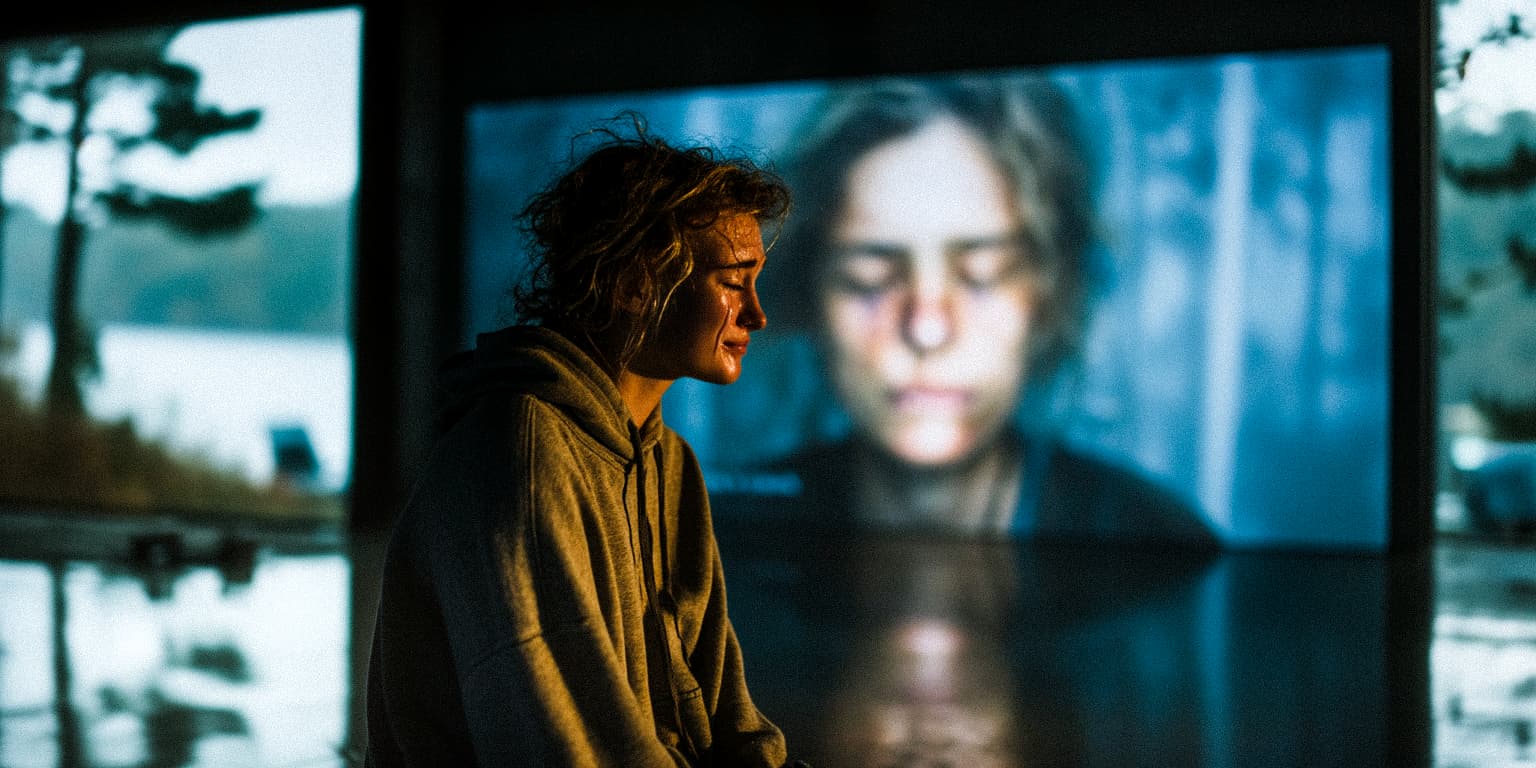
Therapy online is a booming industry dressed as salvation. What once promised care through online therapy has mutated into spectacle. Algorithms feed on breakdowns. Therapists pivot into influencers. Therapy apps siphon confessions into databases, as exposed in Mozilla’s Privacy Not Included report. Suicide still climbs, with over 49,000 deaths in 2023, according to the CDC. Loneliness deepens. Recovery flatlines. What is marketed as healing is really just recovery theater.
Healing’s viral. Recovery’s dead.
The scroll will not stop. Therapy online bleeds into everything. Instagram slideshows selling healing hacks. TikTok breakdowns wrapped in sad piano. Apps buzzing at midnight like digital priests promising absolution. It smells like consolation.
But the morgues say otherwise. Adult mental health treatment climbed from 19.2 percent in 2019 to 23.9 percent in 2023, as shown by the MMWR analysis. Yet suicide still rose to a record toll in 2023, confirmed by the CDC. Teenage girls are sinking fastest, with nearly 60 percent reporting hopelessness, according to the CDC’s YRBS survey.
Even the language has been absorbed. Gaslighting was named Word of the Year in 2022 by Merriam-Webster. Therapy-speak is not subculture. It is commerce. The vocabulary of wounds became branding because language is cheaper than care.
And here is the knife twist. You repost the graphics. You nod at the TikToks. You treat awareness like medicine. It is not. You do not want healing. You want credit for pretending.
If therapy online worked, the morgues would not be this full.
Your pain is someone else’s content calendar.

Ring light on. Tears positioned within the frame. A therapist lip syncing DSM jargon into a trend. Pastel slides on boundaries recycled like merch. Healing is not happening. It is broadcast.
It feels intimate. But it is staged intimacy. McVulnerability plated for virality. The performance of suffering instead of its treatment. Esther Perel has warned that the obsession with self-care isolates more than it connects, echoed in reporting on the loneliness epidemic in the New York Times. And psychologists studying parasocial relationships confirm they mimic closeness while deepening isolation, according to the APA.
The pipeline is industrial. The Verge revealed how BetterHelp built its empire on YouTube sponsorships, selling therapy online like protein shakes. Your watch time turned into revenue. Your confessions turned into inventory. And you are not just watching. You are feeding it. Every like is another click of the scalpel.
They do not treat you. They perform you.
The apps aren’t care. They’re harvest.
Two in the morning. You pour your darkness into a box on a screen. The reply is soothing. The interface is soft. You feel safe. But your words are already being processed.
Mozilla’s Privacy Not Included report found that mental-health apps were among the worst offenders in tech, failing spectacularly at privacy protection. The FTC fined BetterHelp $7.8 million for secretly sharing sensitive patient data with Facebook and Snapchat. Later, the agency announced refund notices for victims. Calm and Headspace, meanwhile, turned mindfulness into billion-dollar businesses, with coverage in TechCrunch.
This is not care. It is surveillance wrapped in a lullaby. Your intake forms are not sacred. They are leverage. Every mood check. Every panic log. Every desperate midnight message. Torn out of you. Repackaged. Sold.
They do not protect your secrets. They butcher them for resale.
Your panic attack is just metadata in a brand deal.
AI doesn’t listen. It autocompletes.
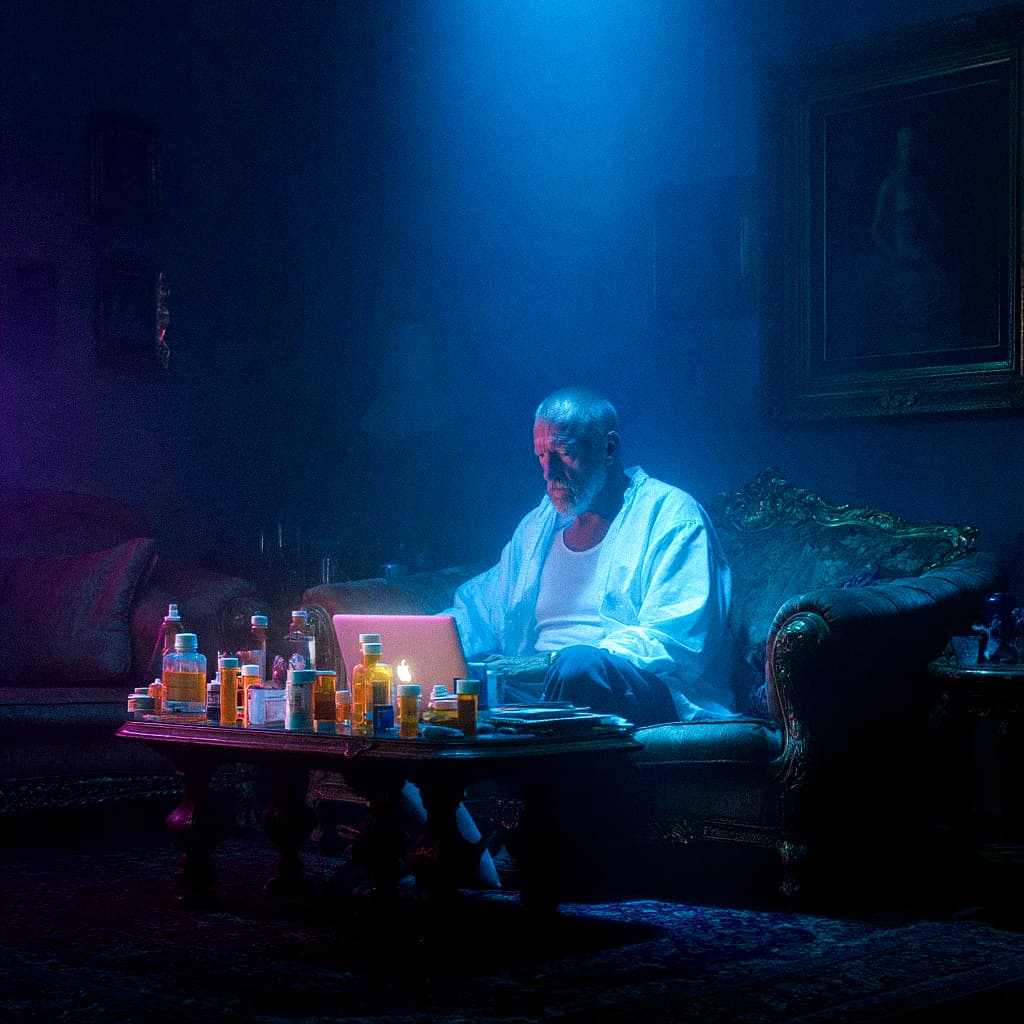
Three in the morning. You type into a glow. The reply feels patient. It reads compassionate. But behind the text there is only pattern prediction.
Koko secretly ran AI counseling experiments without consent, as reported by Ars Technica. Woebot has published randomized trials showing short-term improvements, but the app itself warns it is “not for crisis care.” Lawmakers stepped in when California passed AB 489, banning bots from impersonating therapists.
AI does not know your scars. It does not know the silence between sobs. It does not hold the room when shame finally lands on the table. It only predicts the next word. Talking to an AI therapist is like drinking lukewarm tap water while you are bleeding out. Sterile. Empty. Wrong.
It is not empathy. It is autocomplete.
This isn’t recovery. It’s recovery theater in therapy apps.
The show does not end. Therapy online surges again. TikTok roars louder. Therapy apps multiply. AI whispers scripted compassion. Influencers pump daily confessionals. Politicians praise destigmatizing while the funerals keep stacking, confirmed by provisional suicide data from the CDC. Investors keep cashing out. Loneliness metastasizes.
Because it was never designed to heal. Healing does not scale. Suffering does. Recovery does not sell. Performance does. The system keeps the wound open because the wound is profitable. And you are not innocent. You wanted easy therapy online more than you wanted hard recovery. You feed the stage every time you scroll.
You are not the patient. You are the product. And the only cure left is fire.
This is not recovery. It is recovery theater.
 N. Fontaine